
Insights into the Third Commandment: Taking God’s Name in Vain?

Background

My six-year-old came running, “Daddy, daddy, my sister is being bad.” When I enquired about what the sister did, the older one said, “she is saying God’s name in vain.” So, I pressed further, “What exactly did she say?“ She answered,” “Oh my God.” I dismissed the issue by saying, “That’s not God’s name.”

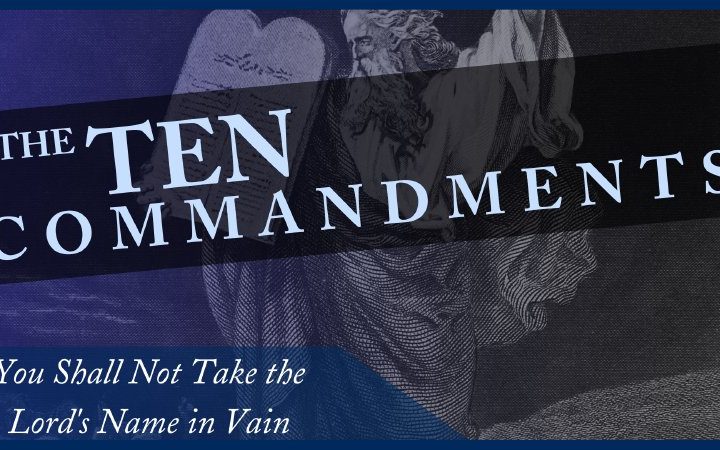
I have no idea where my daughter got that lesson from, but it is pretty pervasive in our churches since the King James Bible gave us the following translation of Exodus 20:7,

Exodus 20:7 KJV
Thou shalt not take the name of the LORD thy God in vain; for the LORD will not hold him guiltless that taketh his name in vain.

There are scholarly debates on how to number the commands. Some scholars believe Exodus 20:7 is the second command in the Ten Commandments, also known as the Decalogue. In this piece, I shall stick with the common belief that it is the third Commandment.

Continue Reading

On John 10:34-36: Humans or Gods?

We have had to study John 10 when we were concerned about something Jesus teaches about salvation. We are back in John 10 in this series for a different reason. Indeed, we have addressed the matter of the gods in John 10 in the past, but that treatment was brief and left much room for misunderstanding. The goal is to build on the earlier material while retaining the earlier blog entry as a standalone article.

Our ultimate aim is to understand Jesus’ comment to his Jewish interlocutors in 10:34 – 36:

John 10:34-36 ESV
[34] Jesus answered them, “Is it not written in your Law, ‘I said, you are gods’? [35] If he called them gods to whom the word of God came—and Scripture cannot be broken— [36] do you say of him whom the Father consecrated and sent into the world, ‘You are blaspheming,’ because I said, ‘I am the Son of God’?

In this passage, Jesus references Psalm 82 to help his claim. This means that we need to understand the Psalm in its context to understand Jesus’ use of it in John 10. That will help us grasp what John 10:34 – 36 is all about. However, in order to understand Psalm 82, we need to address a few relevant points. We begin with the small matter of heaven and hell.

Continue Reading

The Covenant Promise: Abraham’s Blessing, Lost Sheep of Israel, and Jesus

Why Abraham?

Scholars have long recognized that the first 11 chapters of Genesis serve as an extended prologue, providing etiological grounding, among other things, for the accounts that follow. Chapter 12 features the calling of Abram. Why did the calling of Abraham become necessary?

Genesis begins by narrating how God, wanting to make creatures that can image him, prepares a fitting environment. He then creates Adam and Eve and gives them instructions to follow – instructions they can carry out. However, other forces are vested in God’s project. Before long, the project was derailed when only two humans were involved. Things only got worse. By the time four named individuals were involved in the project, a murder had occurred. By the time of Genesis 6, things had become so dire that even God regretted having created humans. Clearly, the Project was not going well. What was God to do — scratch the project altogether? No, that would be a resounding victory for the sinister forces that thwarted his original plans. Start afresh? Yes, but not entirely from ground zero. So, in a sense, the restart is a continuation. Abraham would have to do.

What is Abraham’s qualifying attribute for this mission? The most noticeable feature is that he was childless, and his wife was past the age of childbearing. In other words, though God wants a nation of people, he has chosen a barren couple for that mission. God has chosen someone who requires a miraculous intervention to get the project back on track. He said to Abram:

Genesis 12:2 ESV
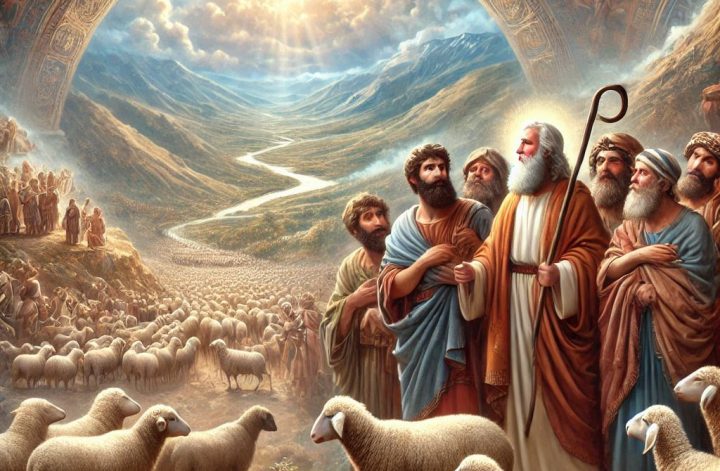
And I will make of you a great nation, and I will bless you and make your name great, so that you will be a blessing.

Of course, becoming a great nation implies having many children and descendants. Sounding like a good deal to the ancient Near-Eastern businessman, Abram obeyed. While he was on his way to where God sent him away from his home country, at the oak of Moreh, and as if to make the point transparent:

Genesis 12:7 ESV
Then the LORD appeared to Abram and said, “To your offspring I will give this land.” So he built there an altar to the LORD, who had appeared to him.

Again, Abram is assured that he will have children of his own. This, especially from Abram’s perspective, is a significant blessing.

Continue Reading

The Quran and Judeo-Christian Pseudepigrapha (Part 5, Finale): The Crucifixion and Trinity

We have seen enough examples to demonstrate that some extrabiblical material in the Quran ultimately derives from Judeo-Christian writings, whether commentaries or creative works. There are other examples one may cite, such as how a raven taught Cain to bury his murdered brother, Jesus talking as an infant, Joseph’s torn tunic (establishing his innocence with Potiphar’s wife), and Jinn being created from fire. These are all derived from Jewish exegetical works. These observations undermine certain critical Islamic beliefs.

First, the idea that the Quran is a perfect revelation from God given to restore corrupted biblical materials or details is undercut. Muslims typically believe this idea not because there is such evidence of corruption in the Bible, but because many of them believe that the Quran says so, and they believe the Quran. (At this point, the typical Muslim reader thinks of differing details in the original Biblical manuscripts as evidence of corruption. Yes, “corruption,” but not the kind that helps the Quran’s narrative. Furthermore, Quranic manuscripts also vary in detail. See our dedicated treatment of this issue here.) Second, the extra-biblical details that the Quran features are from known fictional sources. As we shall see soon, the Quran preserves evidence of seventh-century critics pointing out to Muhammed that his stories were not original but adaptations of old sayings. In light of all we have said, let us now look into the Quran’s position on two major Christian doctrines: the crucifixion of Jesus and the Trinity.

Continue Reading

The Quran and Judeo-Christian Pseudepigrapha (Part 4): Quran 3:35-44 and the Protevangelium of James

John the Baptist was a weird but essential figure in the ministry of Jesus. The Gospels suggest that the men are cousins through their mothers. John’s parents were Zechariah and Elizabeth. Jesus’ parents need no introduction. The Gospels, especially Matthew and Luke, only go as far back in their stories as when Joseph and Mary were already betrothed. Hence, we have no biblical records of the birth of Mary or Joseph.


The Quran, on the other hand, has quite a bit to say about the birth of Mary, her childhood, and, as I will explain, how Joseph was chosen for her as a husband. We find this story in Quran 3:35-44,

Surah Aal-e-Imran, Verse 35:
إِذْ قَالَتِ امْرَأَتُ عِمْرَانَ رَبِّ إِنِّي نَذَرْتُ لَكَ مَا فِي بَطْنِي مُحَرَّرًا فَتَقَبَّلْ مِنِّي إِنَّكَ أَنتَ السَّمِيعُ الْعَلِيمُ

When a woman of Imran said: My Lord! Surely I vow to Thee what is in my womb, to be devoted (to Thy service); accept therefore from me, surely Thou art the Hearing, the Knowing.

Continue Reading

The Quran and Judeo-Christian Pseudepigrapha (Part 3): Quran 2, Genesis Rabbah, and the Apocalypse of Moses

Page 2 of the Bible recounts the story of Adam’s creation. Of all the details given, nothing is said about how angels felt about the creation of humans. In fact, if one does not have other later biblical information to go by, one wouldn’t even know that angels existed. The Quran, on the other hand, has much to say about how angels felt about God’s intent to create humans. All of them, at first, were opposed to the creation of humans. But after Adam demonstrated his superior knowledge, many angels changed their minds. Satan, however, never accepted the idea. In fact, the Quran teaches that Satan was cast away from heaven because he would not accept God’s sovereign choice to create humans.

Continue Reading

The Quran and Judeo-Christian Pseudepigrapha (Part 2): Quran 6:74 – 79 and the Apocalypse of Abraham

In the Judeo-Christian worldview, Abraham is a big deal. Narratively, he is a type of Adam, the human who carries forward the tasks of Adam and initiates the process of undoing his errors. When humanity at Babel went south, God called Abraham out from his family to reboot the Humanity Project. Abraham was to be how God would achieve the goal of having all humans worldwide loyal to Him. However, the Bible does not say much about his prior life. We know he originated from the Ur of the Chaldeans, and we have his genealogy. That’s about it.

The Quran, on the other hand, has more to say about Abraham’s prior life. For instance, the Quran tells about Abraham turning away from paganism to embrace Allah in Quran 6, after contemplating some heavenly bodies:

Continue Reading

The Quran and Judeo-Christian Pseudepigrapha (Part 1): Quran 3, 19, the Gospel of Pseudo-Matthew, and Childhood of the Saviour

It is an article of faith in Islam that the Quran is a perfect revelation of God delivered through the prophet Muhammad to humanity. It became necessary for God to send the Quran because of the corruptions of the Scriptures of Judaism and Christianity that came before it. (Strictly and properly speaking, Christianity is a sect of Judaism. It was one of many sects of Judaism in the first century AD.) In a restorative move, God provided Muhammed with fresh revelations. In some cases, the revelations are altogether missing from the Bible – which, in a typical Muslim’s mind, further confirms the corruption charges – or are present in the Bible in a different form.

Continue Reading

Jesus Goes to Hell: The Gates of Hell in Matthew’s Gospel

Matthew 16:13-16 ESV
[13]  Now when Jesus came into the district of Caesarea Philippi, he asked his disciples, “Who do people say that the Son of Man is?” [14] And they said, “Some say John the Baptist, others say Elijah, and others Jeremiah or one of the prophets.” [15] He said to them, “But who do you say that I am?” [16] Simon Peter replied, “You are the Christ, the Son of the living God.”

Background: The Confession of Peter

The Confession of Peter is a famous passage in which Peter confesses Jesus as the Messiah and the Son of the living God. The Synoptic Gospels all record the event, but Matthew provides more details. In this piece, we shall mainly use Matthew’s account to explore the meaning of the event and Matthew’s literary use of the story in his Gospel.

Matthew’s Gospel is often described as the most Jewish of the canonical gospels. It is not without warrant. Matthew’s first step in his Gospel is to provide a genealogy that connects Jesus to both Abraham and David. That move is not trivial. The link to Abraham establishes Jesus as the legitimate, promised “seed” (Genesis 3:15, 22:18). Simultaneously, the connection to David evokes messianic themes familiar to people in the Jewish worldview. Matthew also portrays Jesus in ways reminiscent of Moses, the chief Apostle and Prophet of Judaism. Both Moses and Jesus escaped being killed as infants by the rulers of their times; Jesus’ Sermon on the Mount contrasts with Moses’ giving of the Law on Mount Sinai. Also, both men serve as deliverers of their people and perform miracles in the liberation process. Even in our day, the Jewishness of Matthew continues to be appreciated. I have watched several stories of Messianic Israeli Jews who embraced Jesus after reading Matthew.

In popular understanding, the Confession of Peter is important because it conveys divine revelation of Jesus’ true identity as the promised Messiah. That much is undoubtedly true, but Matthew does more in his telling, given the extra details he provides. Besides, we should notice that Matthew has already dropped numerous hints about Jesus’ true identity before Peter’s confession in Chapter 16. Let us consider a few of these hints. 

Matthew’s Many Portrayal of Jesus as Yahweh

First, Matthew introduces John the Baptist as one preparing the way for Jesus in this way (3:3): “This is he who was spoken of through the prophet Isaiah: ‘A voice of one calling in the wilderness, “Prepare the way for the Lord, make straight paths for him.” ’ In the original Isaiah passage, “the Lord” was Yahweh. So, Matthew’s use of the passage ascribes the divine name to Jesus. In Matthew’s story, John the Baptist did not know at this point that Jesus was Yahweh. Still, a careful reader of Matthew’s work would have noticed this literary move. 

Continue Reading

The Suffering Saviour: Did Jesus Suffer Sexual Abuse?

Warning: This article may be triggering as it touches on the subjects of torture and sexual abuse.

Background

Often, the prevailing imagery surrounding a distant event has since been distorted, sanitized, or cleaned up, so that current beliefs about the event may be inaccurate or incomplete. We can find examples in several spheres of life, including church history. For example, what many churchgoers today believe about angels, or what Jesus or even Satan looked like, has been shaped more by other factors along the way, so that the beliefs, measured against what first-century Palestinians held, are dissimilar. The idea that angels, a term popularly used to refer to essentially all heavenly beings except God, are winged creatures derived from European literature, not the Bible. To be sure, the Bible does speak of heavenly beings like cherubs with wings, but biblical angels are not winged beings. On this platform, we have already addressed the origins of the ahistorical White Jesus in previous blog posts. We also considered the complexities surrounding the identity of Satan, especially among Yoruba-speaking believers. The present article is another instance of correcting a distorted historical event. 

Continue Reading