
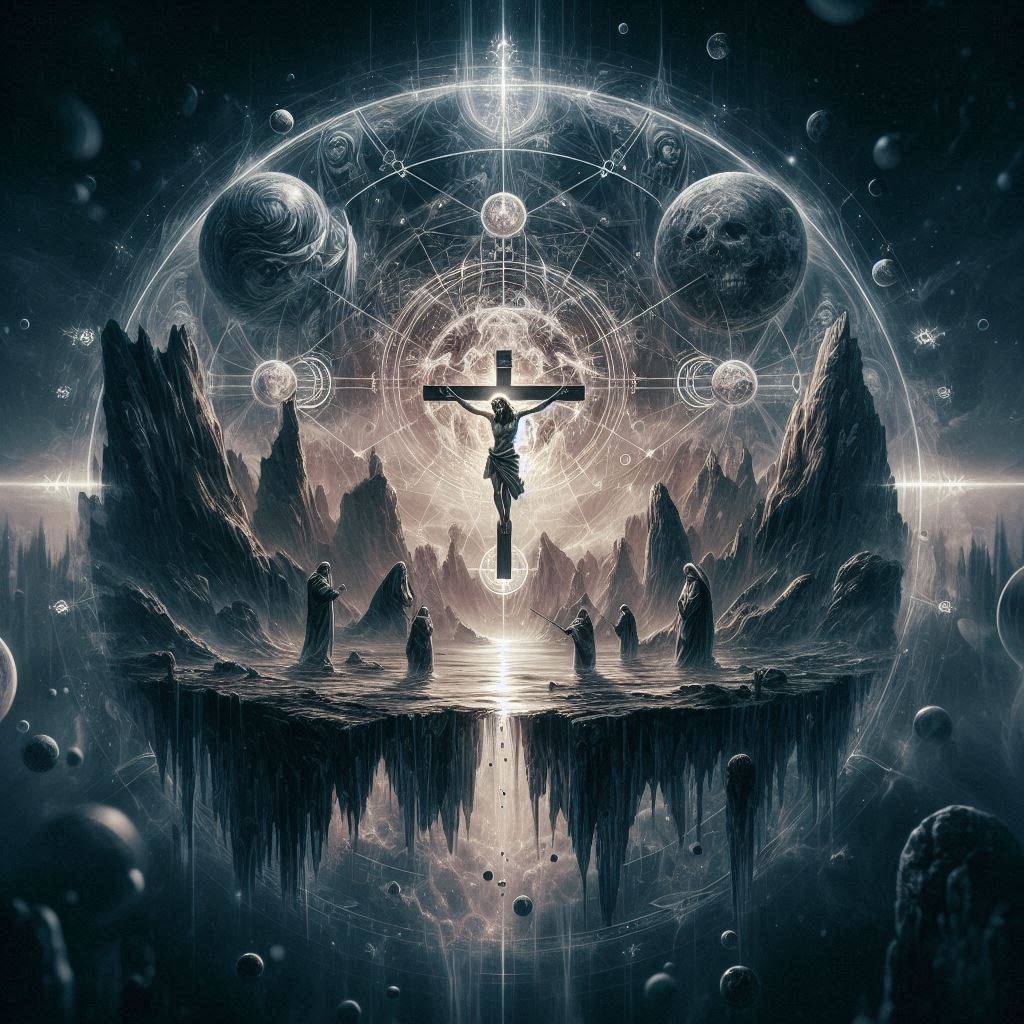
The short answer is no. The long answer is “No, but.” And, no, I’m not contradicting Scripture. This issue came up during a recent conversation. It is a popular idea among churchgoers, and I think it is worth writing about briefly. There are two matters surrounding this issue. One is textual (or linguistic), and the other is philosophical. The primary text for the idea is Revelation 13:8. The chapter is about the beast from the sea, who will wage war against the people of God and kill some of them. Here is one translation,
Revelation 13:8 NKJV
All who dwell on the earth will worship him, whose names have not been written in the Book of Life of the Lamb slain from the foundation of the world.
Clearly, this translation says the Lamb, Jesus, was slain from the foundation of the world. Here is another translation,
Revelation 13:8 ESV
and all who dwell on earth will worship it, everyone whose name has not been written before the foundation of the world in the book of life of the Lamb who was slain.
Here, we see that the qualifying phrase, “before the foundation of the world” modifies “name has not been written.” What is it – what’s going on?
What’s going on is that the Greek text can be legitimately read in both ways, but, of course, the two readings produce different meanings. Something like this sometimes happens in English, too, in misplaced modifiers. Consider the following sentence:
She served sandwiches to the children on paper plates.
This can be read to imply that the children are on paper plates. However, because it is a common cultural practice in the US, one meaning is accentuated, and the other is repressed.
So, if we cannot settle Revelation 13:8 at the text level, how then do we determine what it communicates? It would be helpful if another Bible passage conveyed a similar idea. Where no such corroborating verse exists, we cannot be sure. That does not mean we would be helpless, since we may find help in non-canonical Greek texts or other appropriate literature. Fortunately, we have a little help from another biblical passage in this case.
However, before we see what sort of help we have elsewhere, let us dwell on Revelation 13:8 a bit longer. Suppose the New King James Version’s rendition is correct. The obvious question is: what does it mean that Jesus was slain from the foundation of the world? Indeed, it cannot mean that Jesus has twice been killed. That would require two resurrection events. It also would imply that he did not have an indestructible life after the first resurrection. And WHY was he slain before anyone had the opportunity to sin? Along this boulevard is absurdity.
But there is a sense in which the NKJV rendition may be meaningful. That is if one reads it in light of the following passage:
1 Peter 1:19-20 ESV
[19] but with the precious blood of Christ, like that of a lamb without blemish or spot. [20] He was foreknown before the foundation of the world but was made manifest in the last times for the sake of you.
The idea here seems to be that God foreknew that a crucified Messiah would be necessary “before the foundation of the world” – a language that likely means “eternally.” When the time was right, God provided the Messiah, who was crucified early in the first century AD. So, he was not slain from the foundation of the world, but God foreknew before the foundation of the world that he would be killed.
Now, what does it mean to say God foreknows a thing? Philosophers (and Christians) differ on that. This territory has already been covered in other blog entries, so I will only summarize it here. Some people believe that God’s foreknowing act is also a cause. So, for example, I am typing this sentence now because God foreknew it. This view can get ugly very quickly because it makes God the cause of evil in the world. (e.g., The reason someone is killed or a child is raped is that God foreknew it.)
A different view suggests that God foreknows a thing precisely because it would happen. So, God foreknows that I will type this sentence because that is what I have typed. God’s foreknowledge would have been different if I had typed a different sentence – and there always is a real world of alternative acts available to me. In other words, God’s foreknowledge does not cause me to type. But because I did type, God must have foreknown it.
God is, of course, capable of foreknowing and causing the object of his foreknowledge. The subtle but critical point here is that causation need not be inherent to divine foreknowledge. That God foreknows a thing does not necessarily imply that he causes the same into existence. I will leave it for readers to wrestle with these ideas.
So, Jesus was not slain from the foundation of the world. The Assyrians and Babylonians had not yet invented crucifixion. But God knew before the foundation of the world that a crucified Messiah would be required in the first century AD. Thus, the sending of the Messiah was not a Plan B. Here is how Peter says it:
Acts 2:23 ESV
this Jesus, delivered up according to the definite plan and foreknowledge of God, you crucified and killed by the hands of lawless men.
God did not freak out that Jesus was killed. He foreknew it.

1 Comment