
Romans 13:1-7 and Conservative Politics

This Pauline passage has recently come into the limelight. It is a tough one deserving of a careful wrestle. I’m not interested in the politics. My concern is about making sense of the passage within Romans and the Pauline corpus as a whole:

Romans 13:1-5 ESV
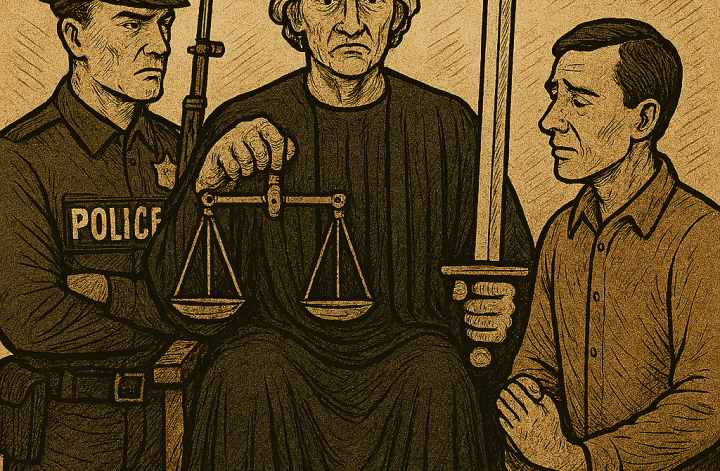
[1] Let every person be subject to the governing authorities. For there is no authority except from God, and those that exist have been instituted by God. [2] Therefore whoever resists the authorities resists what God has appointed, and those who resist will incur judgment. [3] For rulers are not a terror to good conduct, but to bad. Would you have no fear of the one who is in authority? Then do what is good, and you will receive his approval, [4] for he is God’s servant for your good. But if you do wrong, be afraid, for he does not bear the sword in vain. For he is the servant of God, an avenger who carries out God’s wrath on the wrongdoer. [5] Therefore one must be in subjection, not only to avoid God’s wrath but also for the sake of conscience.

Even before the most recent invocation of this passage in the service of politics, Christians were divided over how best to understand it. On the one hand, it reads quite straightforwardly: governments derive their authority ultimately from God; therefore, the Christian must obey and not resist a government. On the other hand, such a reading is difficult to square with other things we know.

First, Paul himself had gone to the established authorities to seek permission to prosecute Christians – and “prosecute” often meant execute. Paul was there, giving his approval to Stephen’s execution after the latter preached a comprehensive rendition of the gospel. He was heading to Damascus “so that if he found any belonging to the Way, men or women, he might bring them bound to Jerusalem” (Acts 9:2). It was on this famous journey that Paul saw the risen Jesus. What did Paul do? The very opposite of what the established authority commissioned him to do. In other words, Paul “resists the authorities” (Romans 13:2).

Paul was not alone in this defiant act, either. Before he met Jesus, Peter and John performed a miraculous act that caught the attention of the authorities:

Acts 4:5-6, 17 ESV
[5] On the next day their rulers and elders and scribes gathered together in Jerusalem, [6] with Annas the high priest and Caiaphas and John and Alexander, and all who were of the high-priestly family.
[17] But in order that it may spread no further among the people, let us warn them to speak no more to anyone in this name.”

In the end, the authorities explicitly told the Apostles never to speak or teach in Jesus’ name to anyone else (Acts 4:18). In response, the students of Jesus said:

Acts 4:19-20 ESV
[19] But Peter and John answered them, “Whether it is right in the sight of God to listen to you rather than to God, you must judge, [20] for we cannot but speak of what we have seen and heard.”

These students of Jesus told the established authorities that they would not stop teaching and preaching in Jesus’ name, thereby resisting authorities.

A latent idea in these examples seems to be that Jesus’s disciples believed human authorities had no right to invalidate a divine injunction. Of course, people can be wrong about what they take to be a divine instruction. Nevertheless, the disciples did not deny Jesus’ teachings, even in the face of death.

This brings us back to Romans 13. The consensus today is that Paul wrote this letter at the time of Emperor Nero, a ruthless king who would soon launch an intense persecution of the Christians. This was a time when Christians were a minority in the empire. They were generally despised and viewed with suspicion. Christians were non-violently undermining the empire by not worshipping as others did. They were thought of as atheists – if you did not believe in the multiplicity of gods on offer in the first century, you were an atheist; ask Socrates. They were also believed to be practicing incest, perhaps because they called one another brothers and sisters and met in private spaces. Oh, the republic also thought the Christians were cannibals because they gathered for the Eucharist. Indeed, the empire thought that Christians hated the human race! The irony, of course, was that Christians also rejected infant exposure, a significant source of prostitutes in the empire, among other things.

This is the context wherein Paul writes Romans 13. Might this be Paul’s honest attempt at neutralizing public suspicion of Christians – by ensuring that the Roman Christians were law-abiding denizens? Was this a Pauline version of “Give to Caesar what is Caesar’s”? We may never know without more directly relevant data. In any case, Paul assures his audience that the empire ultimately derives its authority from God. He then adds an interesting twist:

Romans 13:3 ESV
For rulers are not a terror to good conduct, but to bad. Would you have no fear of the one who is in authority? Then do what is good, and you will receive his approval,

Surely, Paul is presenting an idealistic argument. He says the Roman Christians need not fear those in authority, so long as they do good by being law-abiding. Law enforcement officials, Paul says, are only after denizens who do bad.

This is, of course, problematic. “Good conduct,” according to whom? The standard “good conduct” in first-century Rome was to worship as many gods as possible, including the emperors. As we have also seen, “good conduct” meant doing as the Jewish authorities said, especially when they prohibited the preaching of the gospel. In any case, Nero used the Great Fire of 64 CE as an excuse to deflect suspicion from himself and to blame the Christians for it. That was the beginning of the persecution. So, it is simply not true that “rulers are not a terror to good conduct,” and Paul certainly would have known that. Some rulers may despise denizens precisely for their morally good conduct. Of course, for the Christian, there is no alternative to good conduct, even if he suffers for it.

How does this passage apply today? It is important to stress that Christians were a minority in a pagan monarchy. Even the leaders of the church had reasons to “resist the authorities.” Many modern states are democratic, with explicit rules governing the conduct of leaders and the people. The leaders continuously earn legitimacy by being law-abiding themselves. Should they cease to be law-abiding, this may be grounds for removing them from office. In fact, a central tenet of a democracy, as opposed to a monarchy, is that the power lies with the people. People can get rid of any leader they do not like.

Continue Reading